The AI Readiness Paradox: Why Your Team is More Ready for AI Than You Are
A Mai Consulting Synthesis Report | February 2026
Executive Summary
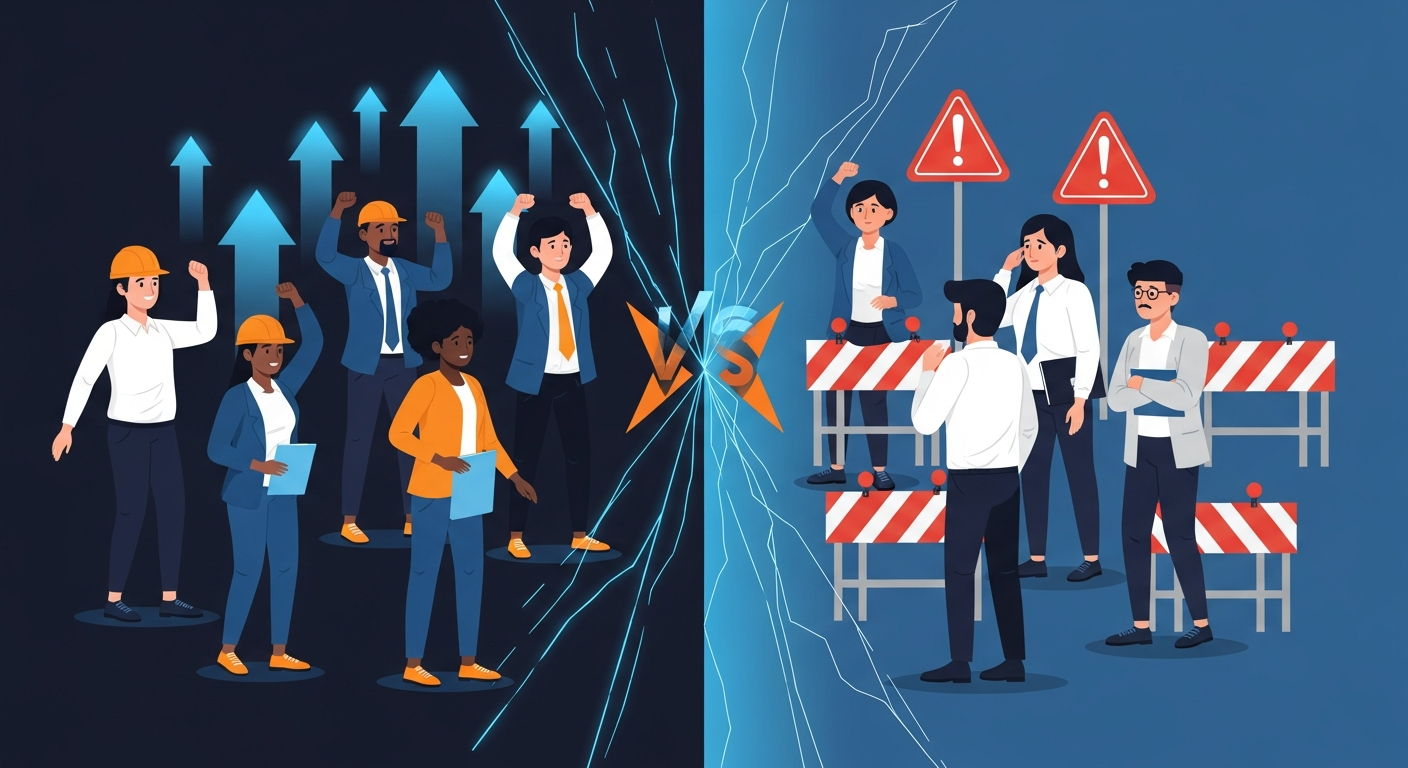
A seismic shift is occurring in the modern workplace, but it's not the one most leaders are focused on. While the conversation has been dominated by the technological arms race of AI, a deeper, more human story is unfolding. New research from EY, McKinsey, and Salesforce reveals a startling paradox: your employees are overwhelmingly ready and eager to embrace AI, but leadership is struggling to keep up. This isn't a skills gap; it's a leadership gap.
This report synthesises the key findings from three major research studies and presents the implications for UK SMB leaders who are trying to navigate one of the most significant workplace transformations in a generation.
The Readiness Paradox: An Eager Workforce and Hesitant Leadership
The data paints a clear picture of a workforce that is not just open to AI, but actively leaning in. A recent EY survey found that a staggering 84% of employees are eager to embrace agentic AI in their roles. This is not a niche group of tech enthusiasts; it is the vast majority of your team. They see the potential for AI to improve their productivity, efficiency, and overall work experience.
However, this enthusiasm is met with a stark reality at the leadership level. Research from McKinsey shows that while 92% of companies plan to increase their AI investments, only 1% of leaders describe their organisations as "mature" in their AI deployment. This disconnect highlights the core of the readiness paradox: the people on the ground are ready to run, but the people at the top are still figuring out how to walk.
The AI Readiness Paradox
Source: EY Agentic AI Workplace Survey, 2025 & McKinsey Superagency Report, 2025
The paradox is further compounded by the anxiety at the middle management level. More than half (53%) of people managers express concern about their ability to supervise AI-augmented teams, and a striking 82% believe that managing AI agents will make their role more challenging. This creates a leadership vacuum at precisely the moment when clear direction is most needed.
The Rise of the Self-Taught Workforce
This leadership gap has created a new phenomenon: the self-taught workforce. With a lack of formal training, employees are taking matters into their own hands. The EY report found that 85% of desk workers are learning about how to work alongside AI agents outside of work, and 83% say most of what they know is self-taught.
While this initiative is commendable, it creates a fragmented and inconsistent approach to AI adoption. It also places an enormous burden on employees, with 61% reporting that they feel overwhelmed by the constant influx of new AI information. Your team is actively trying to close the knowledge gap, but they are doing so in a vacuum, without the strategic guidance and support they need.
The Self-Taught Workforce
Source: EY Agentic AI Workplace Survey, 2025
Learning AI outside of work
Knowledge is self-taught
Overwhelmed by new AI info
Orgs with no formal AI training
(100% - 52% deployed)
The most damning statistic? Only 52% of senior leaders report having a fully deployed initiative for AI training and upskilling. This means that nearly half of organisations have left their employees to fend for themselves in one of the most significant workplace transformations in a generation.
The Communication Crisis: The Cost of Silence
The single biggest threat to successful AI adoption is not technology; it's communication. The research shows a direct correlation between clear communication and positive outcomes. At organisations that clearly articulate their AI strategy, 92% of workers report a positive impact on productivity. That number plummets by 30 percentage points at organisations without clear communication.
The Communication Gap Impact
Source: EY Agentic AI Workplace Survey, 2025
of workers report positive productivity impact
of workers report positive productivity impact
This communication gap is most severe for lower-level employees, who are twice as likely as their VP-level counterparts to report that their organisation has not clearly communicated its AI strategy. This silence from the top breeds uncertainty, anxiety, and ultimately, inertia. When employees don't understand the "why" behind AI adoption or how it will affect their roles, enthusiasm quickly turns to resistance.
The SMB Capacity Challenge: A Unique Burden
For UK SMBs, these challenges are amplified. Unlike their enterprise counterparts, SMBs do not have dedicated change management teams or large training budgets. Leaders are already wearing multiple hats, and the prospect of adding "AI strategist" and "change management expert" to their job description is daunting.
The Salesforce SMB Trends Report found that 75% of SMBs are already investing in AI, and 71% plan to increase that investment over the next year. The appetite is clearly there. However, this is compounded by the fact that SMBs are already struggling with operational inefficiencies. Our own research shows that SMB leaders spend up to 70% of their time firefighting, and that operational friction can cost businesses up to 30% of their annual revenue.
The SMB Capacity Challenge
Sources: Salesforce SMB Trends Report, 2025 & Mai Technology Research, 2026
SMBs recognise the need for AI but lack the bandwidth to implement it well, creating risk of wasted investment and missed opportunities.
The capacity to lead a major technological transformation is simply not there. SMB leaders are caught in a bind: they recognise the need to adopt AI to remain competitive, but they lack the bandwidth to do it well. This is where the risk of poorly executed AI initiatives is highest, leading to wasted investment, employee frustration, and missed opportunities.
The Real Challenge: It's a Leadership Gap, Not a Skills Gap
The conclusion from this wealth of research is clear: the primary barrier to unlocking the full potential of AI is not a lack of skills in the workforce. It is a lack of leadership capacity to guide the transition.
As McKinsey aptly puts it:
"The challenge of AI in the workplace is not a technology challenge. It is a business challenge that calls upon leaders to align teams, address AI headwinds, and rewire their companies for change."
For SMB leaders, the "job to be done" is not to become an AI expert overnight. It is to find a way to bridge the leadership gap, to provide the strategic guidance and operational support that your eager, self-taught workforce is crying out for.
This is where a managed approach to AI becomes critical. It's not just about implementing technology; it's about providing the management layer, the strategic guidance, and the operational stability that allows your team to thrive in this new era. Your people are ready. The question is, how will you lead them there?
About This Report
This report synthesises findings from three major research studies conducted in late 2025 and early 2026:
- EY Agentic AI in the Workplace Survey (October 2025): 1,148 US desk workers across six industries at companies with $1B+ revenue
- Salesforce Small and Medium Business Trends Report (November 2025): 3,350 SMB leaders worldwide
- McKinsey Superagency in the Workplace Report (January 2025): 3,613 employees and 238 C-level executives
All data has been properly cited and synthesised to provide UK SMB leaders with actionable insights into the current state of AI adoption.
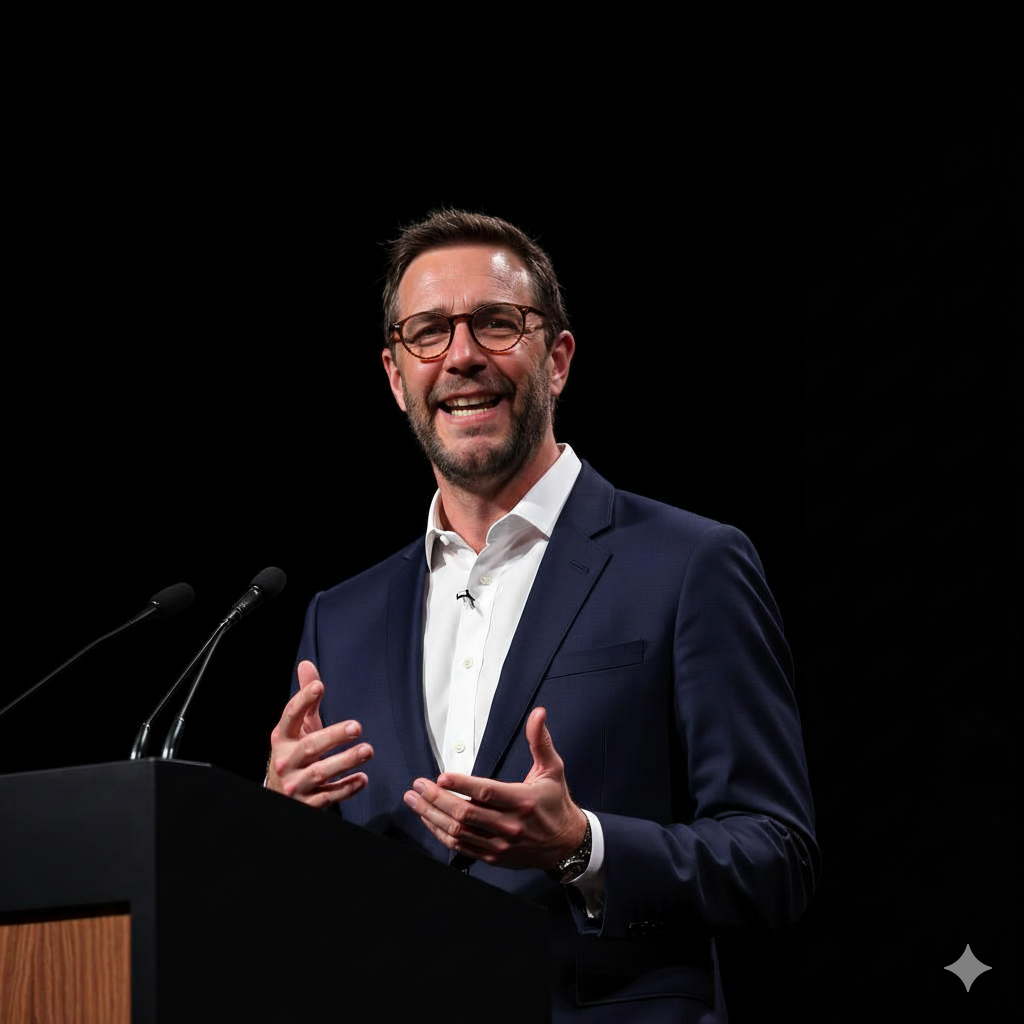
Paul Mills
Founder & CEO, Mai Technology
With 20 years in technology sales and 5 years helping enterprises adopt AI, Paul founded Mai Technology to democratise AI for growing businesses.